



There is a silk that does not come from the mulberry leaf. It grows in forests — on terminalia and arjun trees across Jharkhand and Bihar. The result is Tussar silk: raw, textured, and deeply soulful.


What Makes Tussar Different
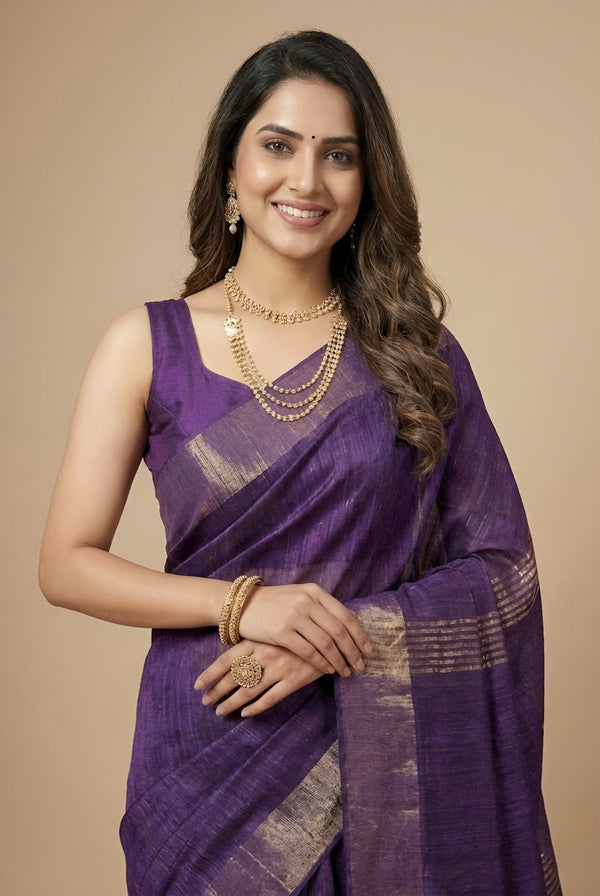
Unlike the smooth, lustrous surface of Mulberry silk, Tussar carries a natural roughness — a slight nub texture that gives each saree its signature hand-feel. This texture is not a flaw; it is the fabric's identity. The colour is inherently warm: a range of honey, ivory, and golden-tan hues that make even unprinted Tussar sarees strikingly beautiful. Tussar is also lighter than most silks, which makes it comfortable for extended wear.
"Tussar is silk as nature intended — unhurried, wild, and full of character that grows only more beautiful with age."
Plain Tussar vs. Ghicha Tussar
Plain Tussar sarees are woven from single-strand Tussar yarn, giving a smoother, uniform texture ideal for dyeing, printing, and embroidery. Ghicha Tussar, on the other hand, is woven from shorter, broken silk fibres — creating a coarser, more pronounced texture. Our Koushika, Mahika, and Gabriella sarees from the Ghicha range carry Silk mark certification — a government seal confirming authentic pure silk content.

Styling Your Tussar Saree
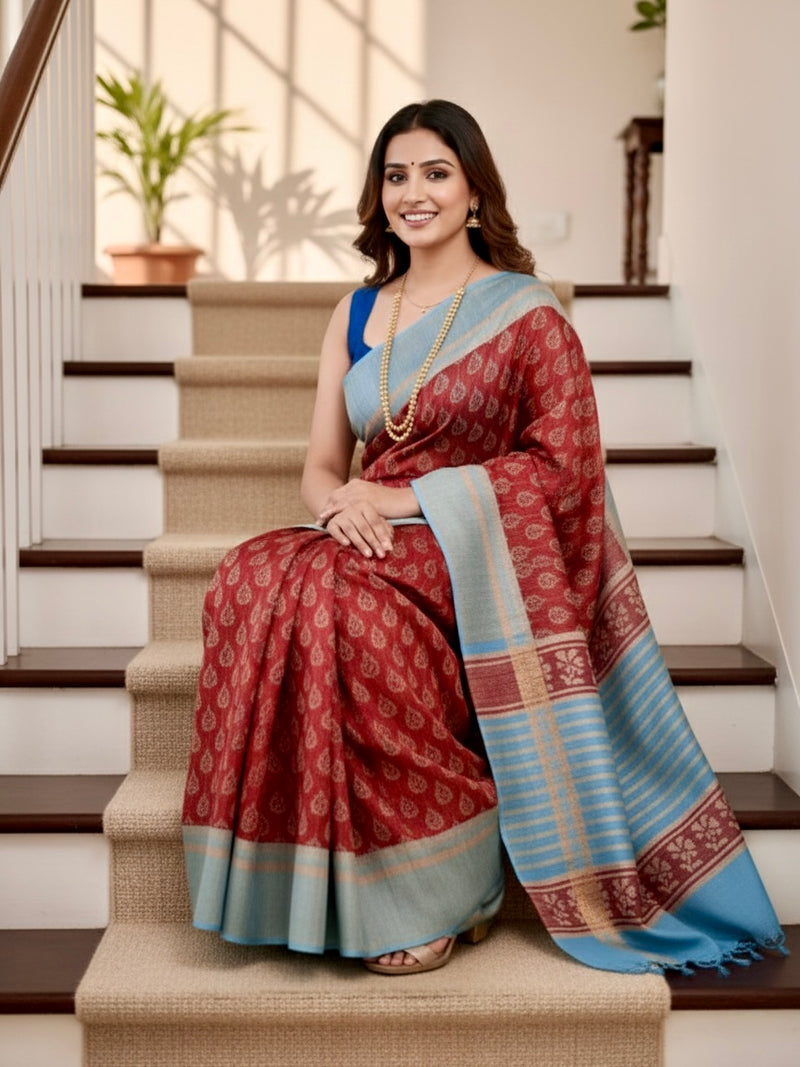
Tussar sarees carry a natural, earthy energy. Style them with brass jewellery, terracotta accessories, and kolhapuri footwear for a look rooted in craft culture. For a contemporary appeal, pair a plain Tussar saree with a structured blazer and minimal gold jewellery. The fabric's natural tone palette — ivory, gold, rust, olive — complements both bold and muted wardrobes equally. Tussar is versatile enough to carry you from morning cultural events to evening family gatherings.
Explore our Silkmark-certified Tussar collection — nature's finest silk, brought to your door. Shop Tussar Silk →
Comments
Be the first to comment.
Leave a comment